
Reliable mobile connectivity is no longer a luxury for modern buildings. Offices, hospitals, hotels, universities, shopping centres, transport facilities and high-rise properties all depend on consistent cellular coverage for communication, business operations and everyday convenience. However, building materials such as concrete, steel and energy-efficient glass can weaken mobile signals and create areas with poor or unreliable reception.
DAS antenna cabling provides an important foundation for addressing these challenges. As part of Distributed Antenna systems, professionally designed cabling connects the equipment and antennas that distribute cellular signals throughout a building. By combining suitable cabling, strategically positioned antennas and appropriate signal distribution equipment, a das antenna system can help provide more consistent indoor coverage.
What Is DAS Antenna Cabling?
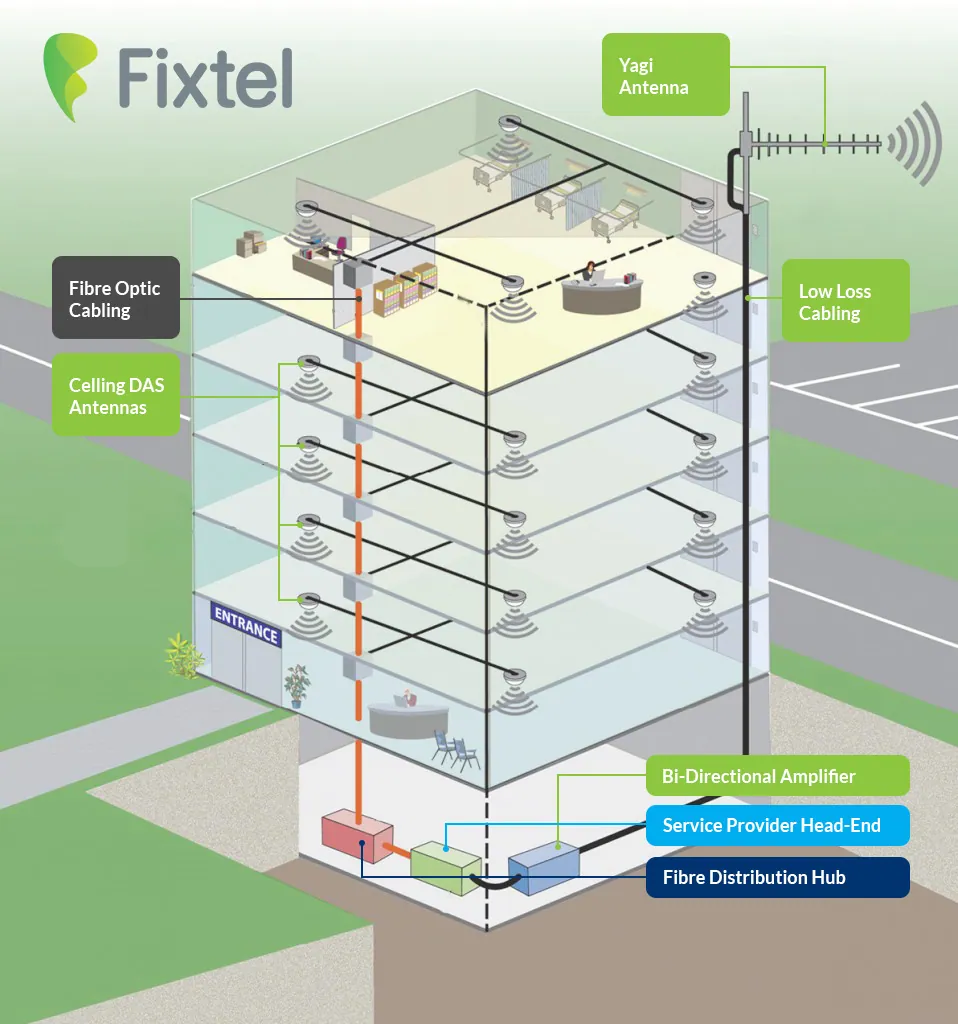
DAS antenna cabling is the cabling infrastructure used to connect the various components of a Distributed Antenna System. Depending on the system architecture and building requirements, this may include coaxial cables, fibre optic cables, splitters, couplers, remote units and other network components.
The purpose is to distribute a cellular signal from a suitable source to multiple antennas positioned throughout a building. Rather than depending on a single antenna to cover a large or complex property, the DAS approach uses multiple antenna locations to provide coverage where it is required.
The cabling between these components is an important part of the overall system. Cable selection, routing, length, connectors and installation quality can all affect signal performance. Proper planning is therefore essential when designing a DAS installation.
How Does a DAS Antenna System Work?
A typical das antenna system consists of several interconnected components that work together to distribute mobile signals.
The process begins with a suitable signal source. The signal is then processed and distributed through the DAS infrastructure. Cabling carries the signal to strategically positioned antennas, which transmit it into different areas of the building.
The number and location of antennas depend on several factors, including the building's size, construction materials, floor layout, expected occupancy and required coverage areas.
In a passive DAS, RF signals are generally distributed using coaxial cables and passive components such as splitters and couplers. Active systems can use fibre optic infrastructure and remote units to distribute signals over greater distances.
The objective is to create a coordinated network that provides consistent cellular coverage rather than isolated areas of strong signal.
Why DAS Antenna Cabling Is Important
The performance of a distributed antenna installation depends on more than simply placing antennas around a building. The infrastructure connecting those antennas must also be appropriately designed.
Cable loss is one of the important considerations. As RF signals travel through cabling, some signal strength can be lost. Longer cable runs can increase this loss, making correct cable selection and system design particularly important.
Installation quality also matters. Connectors need to be correctly fitted, cable routes should be carefully planned, and the system should be tested after installation.
A properly engineered DAS system brings these considerations together to create a reliable indoor cellular network.
Improving Coverage Across Large Buildings
Large buildings often present significant challenges for cellular connectivity. Internal rooms, basements, corridors, stairwells and areas surrounded by reinforced concrete may experience weaker signals than outdoor areas.
Distributed Antenna systems address this challenge by placing multiple antennas throughout the coverage area. Instead of attempting to transmit a signal from one central point, the network distributes coverage closer to users.
DAS antenna cabling connects these distributed components and allows the system to extend coverage across multiple floors and sections of a building.
This approach can be particularly valuable in high-rise buildings, where the distance between equipment and antenna locations can be considerable.
Active and Passive DAS Cabling
The appropriate cabling approach depends on the design and requirements of the DAS system.
Passive DAS installations commonly use coaxial cabling to distribute RF signals between the head-end equipment, passive components and antennas. This approach can be suitable for smaller or moderately sized buildings where cable distances and signal requirements can be effectively managed.
Active DAS installations may use fibre optic cabling to connect central equipment with remote units. Fibre can support longer distribution distances and can be useful for large properties with extensive coverage requirements.
The choice between active and passive architecture should be based on factors such as building size, coverage requirements, cable distances, system capacity and the desired scalability of the installation.
Applications of Distributed Antenna Systems
DAS solutions can be used in many environments where dependable indoor mobile connectivity is important.
Commercial Buildings
Office buildings often contain multiple floors, meeting rooms and enclosed spaces where mobile signals can be inconsistent. A DAS can help provide more uniform coverage throughout the workplace.
Hospitals
Hospitals contain complex layouts, thick walls and equipment that can make cellular coverage challenging. Reliable connectivity can support communication for staff, visitors and operational requirements.
Hotels
Guests expect dependable mobile connectivity throughout rooms, corridors, reception areas and other facilities. A distributed antenna network can help address coverage gaps across large hotel properties.
Shopping Centres
Large retail environments can contain extensive indoor areas where outdoor cellular signals are weakened. Multiple antennas can distribute coverage across retail floors, common areas and other spaces.
Universities and Campuses
Educational facilities often include lecture halls, libraries, laboratories and multiple buildings. A carefully designed DAS can help provide consistent coverage across high-occupancy areas.
High-Rise Buildings
High-rise structures can experience different signal conditions on different floors. DAS antenna cabling can connect antennas across multiple levels, supporting a more consistent coverage environment.
Planning DAS Antenna Cabling
Successful DAS installation begins with careful planning. A site survey can help identify existing signal conditions, building materials, potential coverage gaps and suitable antenna locations.
The design process should also consider cable pathways, equipment rooms, risers, ceiling spaces and existing services. In new construction projects, DAS infrastructure can be incorporated into building plans at an early stage. For existing buildings, installers may need to work around established infrastructure and occupied areas.
The system should also be designed with maintenance and future requirements in mind. Clearly planned cable routes and accessible equipment locations can simplify troubleshooting, upgrades and ongoing servicing.
Testing and Optimisation
Testing is an important stage of any DAS installation. Once cabling and antennas have been installed, the system should be assessed to confirm that it is operating according to the design requirements.
Testing can help identify excessive cable loss, connector problems, coverage inconsistencies and other performance issues. RF measurements and coverage testing can also help determine whether antenna locations are delivering the intended results.
Optimisation may involve adjusting system components, antenna positions or signal levels to achieve the desired coverage.
A well-tested DAS system can provide a more reliable and predictable indoor cellular environment.
Benefits of a Properly Designed DAS System
A professionally designed DAS system can offer several advantages for buildings with challenging indoor coverage conditions:
- More consistent mobile coverage
- Reduced indoor signal dead zones
- Better connectivity across multiple floors
- Support for large and complex buildings
- Flexible antenna placement
- Improved infrastructure organisation
- Potential support for evolving mobile technologies
- A scalable approach to in-building connectivity
The exact benefits depend on the building, system architecture, available signal sources and project requirements.
FAQs About DAS Antenna Cabling
What is DAS antenna cabling?
DAS antenna cabling is the cabling infrastructure that connects the equipment and antennas within a Distributed Antenna System. It helps carry and distribute cellular signals throughout a building.
Why is DAS antenna cabling important?
Proper cabling helps minimise unnecessary signal loss and ensures that antennas and system components are correctly connected. Cable type, length, routing and installation quality can all influence system performance.
What is the difference between active and passive DAS?
Passive DAS generally distributes RF signals through coaxial cabling and passive components. Active DAS can use fibre optic cabling and remote units to distribute signals across larger or more complex buildings.
Where can a DAS antenna system be used?
DAS solutions can be used in offices, hospitals, hotels, universities, shopping centres, high-rise buildings, transport facilities and other large structures where reliable indoor cellular coverage is required.
Does a DAS system improve mobile coverage?
A properly designed and installed DAS can help improve the consistency and reach of cellular coverage inside buildings, particularly in areas where building materials or distance from outdoor cell sites create coverage challenges.
How is DAS cabling planned?
Planning typically considers building size, construction materials, floor layouts, existing signal conditions, antenna locations, cable routes, equipment requirements and future expansion needs.
Conclusion
DAS antenna cabling is a fundamental part of creating reliable in-building cellular connectivity. By connecting strategically positioned antennas with the appropriate distribution equipment, a well-designed das antenna system can help overcome coverage challenges caused by building structures and large indoor spaces.
From commercial offices and hospitals to hotels, shopping centres and high-rise developments, Distributed Antenna systems provide a structured approach to distributing mobile signals throughout complex environments. Careful planning, appropriate cable selection, professional installation and thorough testing are all important for achieving dependable performance.
When designed around the specific requirements of a building, a das system can provide a scalable infrastructure for more consistent indoor mobile connectivity and help ensure that users can stay connected where reliable coverage matters most.